During solid-phase synthesis, each amino acid combining action has a yield of about 99-- 99.8%. When a combining fails, the growing chain is topped to prevent additional elongation of the wrong series. The outcome is a peptide that's shorter than planned-- missing several amino acids.
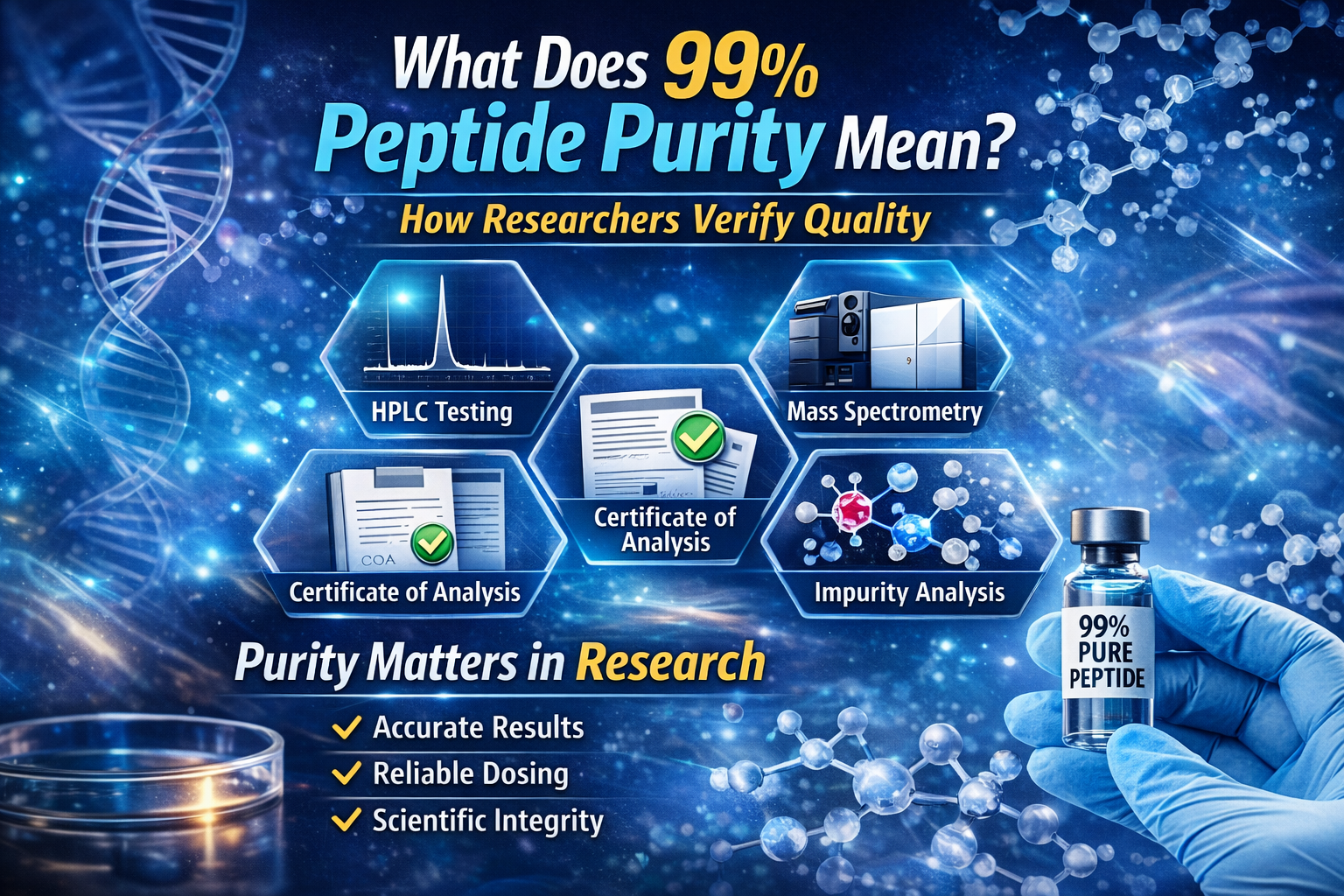
Always inspect that your peptide comes with proper logical data (HPLC chromatogram and MS results) and is identified for research study use.
Accreditation by relevant bodies (such as ISO/IEC or accreditation for GLP/GMP compliance) is a solid indication of quality.
Making use of a very cleansed peptide minimizes these risks and enhances the integrity of your information.
Peptide sequencing is important for determining the specific amino acid sequence of peptides, including alterations like phosphorylation or acetylation.
We integrate LC-MS/MS and chemical digestion analysis to precisely confirm the sequence and adjustment websites of non-natural customized peptides.
Reliable peptide suppliers always note their products in this manner and offer high quality reports with HPLC and MS data to support the pureness degree. As long as you obtain peptides from a trusted resource that gives a total certificate of evaluation, you can be certain in the peptide's purity grade and usage extent. Peptides are tested through a mix of strategies, consisting of HPLC for purity, mass spectrometry (MS) for series verification, and nuclear magnetic vibration (NMR) for structural analysis. These methods assist identify the peptide's composition, verify the molecular weight, and identify any kind of architectural changes or contaminations, ensuring the peptide fulfills top quality and spec requirements. With our extensive peptide analysis system, Innovative Proteomics has developed a very delicate and customized system.
High-performance Liquid Chromatography (hplc): The Purity Criterion
It is one reason proper peptide storage space and reconstitution techniques matter. Partial peptide fragments can arise from insufficient synthesis or post-synthesis deterioration. These fragments are generally smaller sized than the target peptide and might elute at different retention times.
Advised Examinations By Analytical Objective
Irregular particle dimension distribution and morphology can affect bioavailability and security. BOC Sciences is furnished with tools like DLS, TEM, SEM, etc, to completely evaluate nanoparticle size, distribution, and microstructure. For us, pureness isn't simply a percent-- it's a promise of stability, uniformity, and regard for the science Visit the website being done.
Additionally, keep in mind that "research-grade" peptides are indicated for the laboratory bench and come with high purity and identification checks yet are not created as medications. Constantly check that your peptide features appropriate analytical data (HPLC chromatogram and MS results) and is identified for research study use. Equipped with this understanding, you can with confidence analyze labels like "95% purity, study grade" and utilize those peptides to drive your experiments without confusion. Understanding of purity levels will likewise assist you if you ever require a higher pureness peptide for a particularly sensitive assay. In the end, obtaining the purity degree right indicates a lot more reliable science-- which's the supreme objective for any kind of scientist. With years of analytical screening experience and advanced tool platforms, BOC Sciences supplies extensive peptide top quality testing solutions across the whole process from raw materials to solutions.